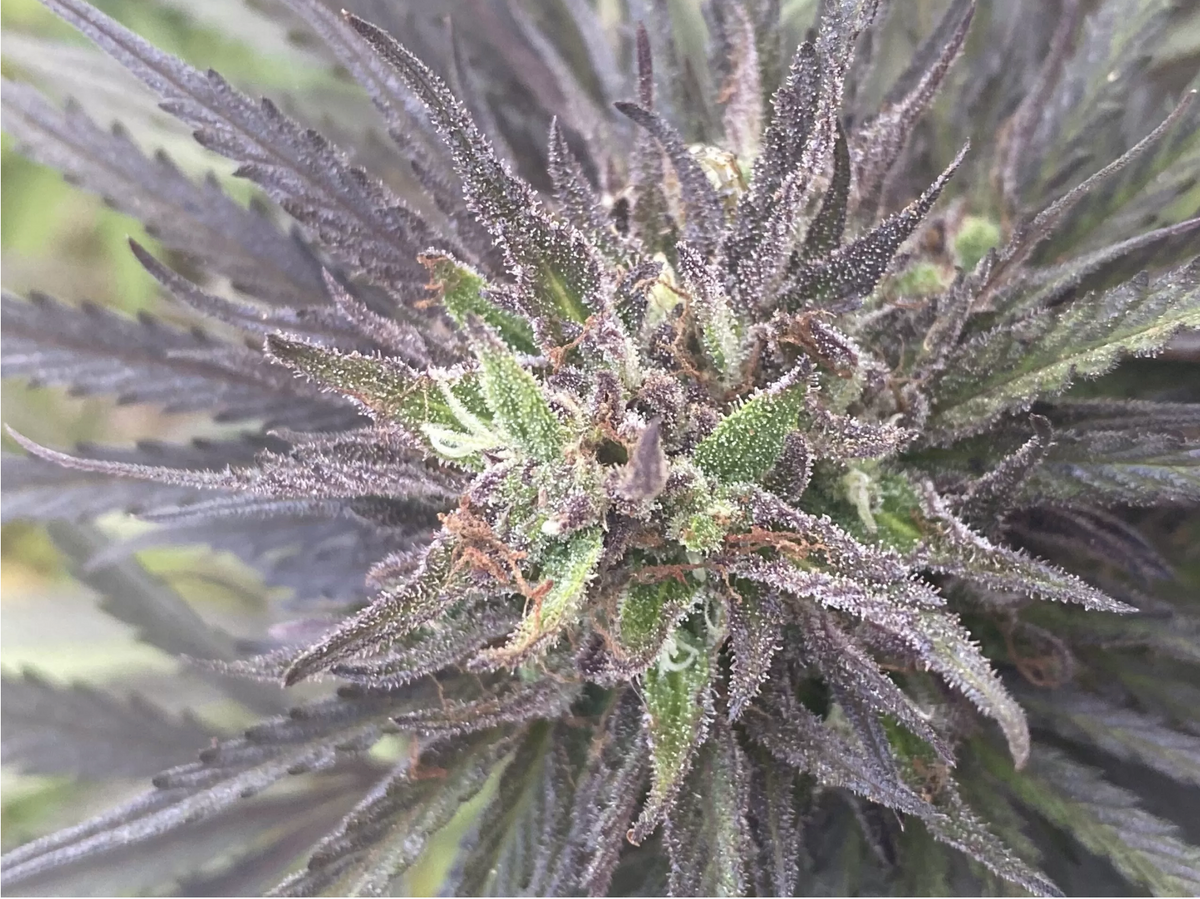
Why Cannabis Seems More Unpredictable Than It Actually Is
If cannabis feels unpredictable, the cause usually isn't cannabis — it's a mismatch between four things: the person, the dose, the formulation, and the delivery format. Even something as ordinary as whether you ate first can shift it. When those line up, the experience becomes clear, useful, and repeatable. Pocket Elixirs, precision crafted experiences, are designed to remove most of the guesswork.
1 · The dose has to match the person
THC doesn't land the same way for everyone. Someone who rarely uses cannabis may feel a real shift from a small amount; a frequent, heavy user may feel almost nothing from the same dose. That isn't mysterious and it isn't a failure of the product — with repeated exposure the body's CB1 receptors become less responsive, so the effective range shifts upward. When a heavy user says “I didn't feel anything,” that can be literally true, and it means the dose wasn't matched to that person — not that the formulation missed.
2 · The formulation has to be built, not left to chance
Precision crafted experiences. THC is the engine; CBD is the regulator; minor cannabinoids are the modulators; terpenes are the directors. The same THC dose can feel calm or sharp, grounded or scattered, depending entirely on what surrounds it. A thoughtful formulation crafts the experience instead of leaving it to whatever the plant happened to contain.
3 · The delivery format matters
How cannabis enters the body changes how it feels. Conventional edibles are unpredictable because cannabinoids are oil-loving, not water-soluble: eaten, they travel through digestion and the liver, where much of the delta-9 THC is converted into 11-hydroxy-THC — associated with a heavier, longer, less predictable experience — and where the fragile minor cannabinoids and terpenes largely degrade. The result feels slow to arrive, heavy, and loosely defined.
Full emulsification answers this. Because it disperses every constituent for more direct, consistent uptake that largely bypasses that fat-and-liver route, onset is more predictable and the whole entourage survives — so what you feel is what was designed.
Pro tip. Avoid a heavy, high-fat meal right for 20-30 min before or after an emulsified product. A flood of dietary fat can pull the constituents back toward the fat-digestion-liver pathway — the very route the emulsion is designed to sidestep — muddying onset and thinning out the supporting cannabinoids and terpenes.
4 · Biology still follows a bell curve
Even with good formulation, people differ in metabolism, receptor sensitivity, and tolerance. No product produces an identical experience for everyone — but a precision-crafted one can be designed around the useful middle of the curve, where most people land close to what it was designed to deliver. It’s not that everyone is different, it’s more like a bell curve just like most things. In this way a cannabis experience can be similar to alcohol in that we have to figure out what works for us - it’s fairly intuitive.
Why expectations go wrong
Much of the market is optimized for one number: THC per dollar. That trains people to expect intensity instead of refinement, and sets up the exact mismatch — wanting a controllable experience, encountering something stronger and less defined. The fix is alignment: match the dose to the person, build the formulation with intent, let the format support consistent onset, and start from a clear experience target. That's the difference between THC as an ingredient and cannabis as a crafted experience — and it's what lets you choose to check in rather than check out. The active ingredient is you.
REFERENCES
CB1 receptor adaptation with chronic use: Hirvonen et al. (2012), Molecular Psychiatry 17:642.
11-hydroxy-THC and oral cannabinoid metabolism: pharmacology reviews of oral vs. inhaled routes.
Read more

Imagine for a moment, you are in your yoga space, in child’s-pose, stretching your body at the start of your yoga session. You try to empty your mind and focus on your body and being present but yo...

A low-dose THC drink and a glass of wine aren't two versions of the same thing. They work through different systems, and the clearest difference is direction: alcohol's arc, past a point, bends tow...